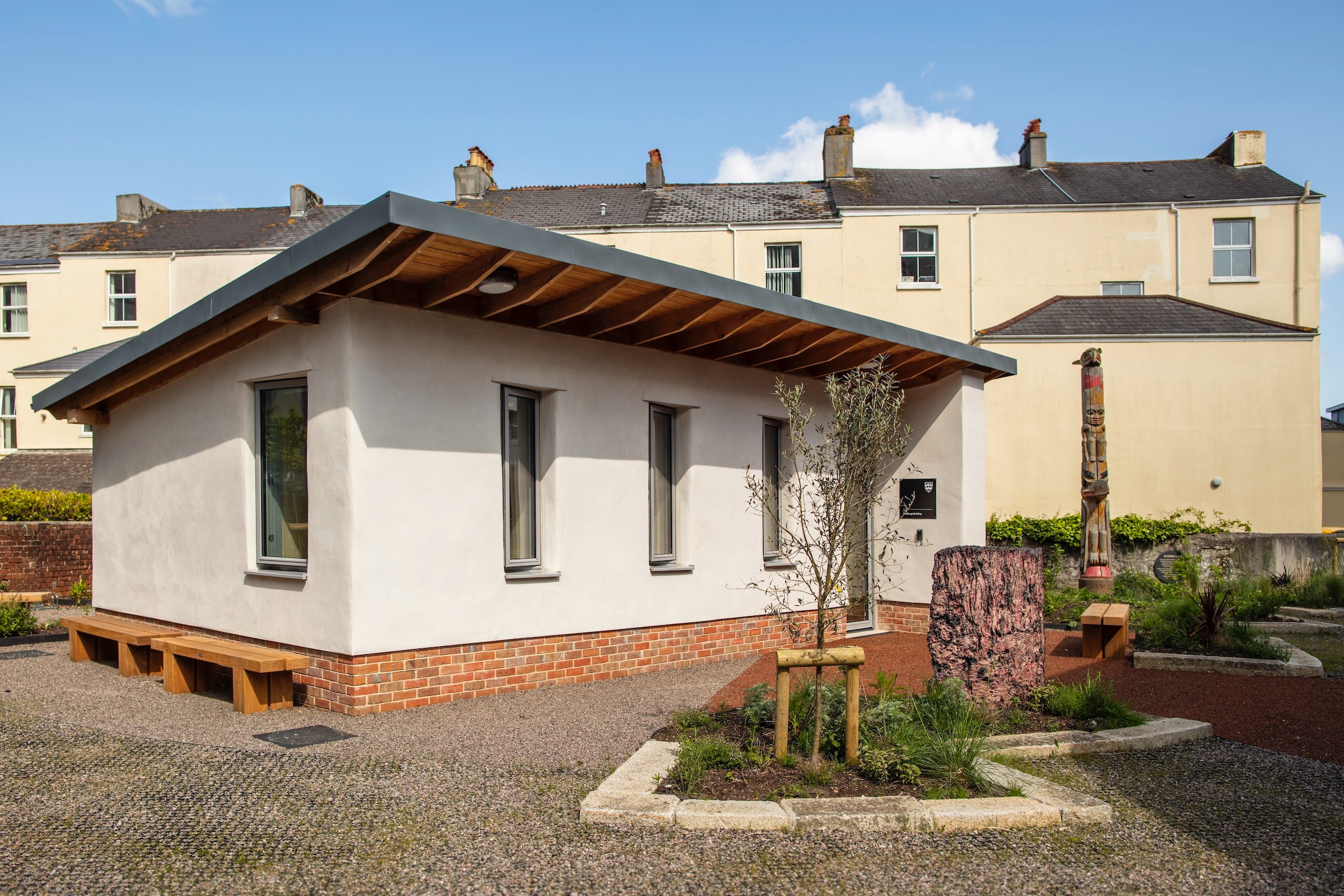
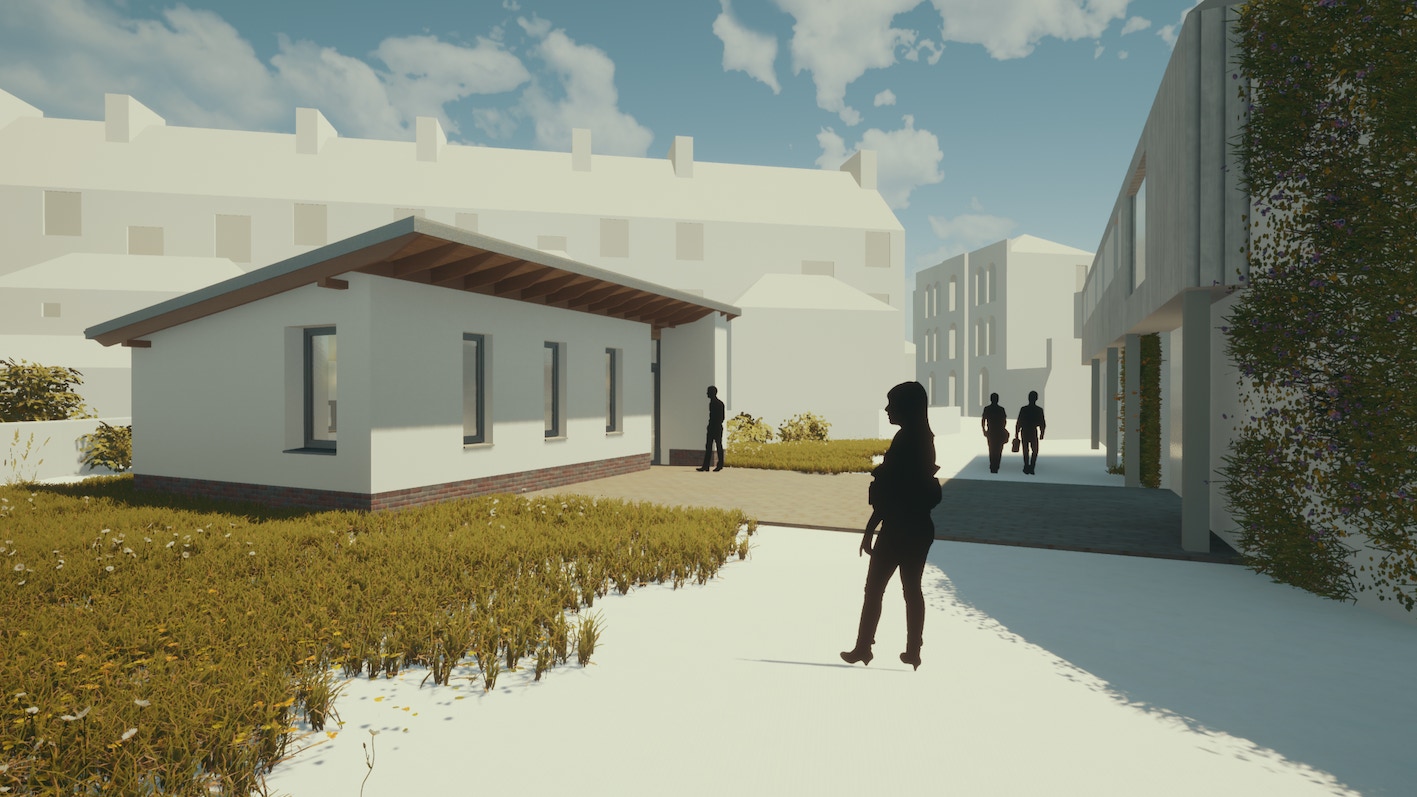
The next stage of development was to scale the research up from laboratory investigations to full scale in-situ examples. This proposed CobBauge building therefore provides an opportunity to monitor and demonstrate this material’s thermal performance in addition to its other core benefits of hygroscopic and thermal mass performance and by being a low embodied energy construction solution.
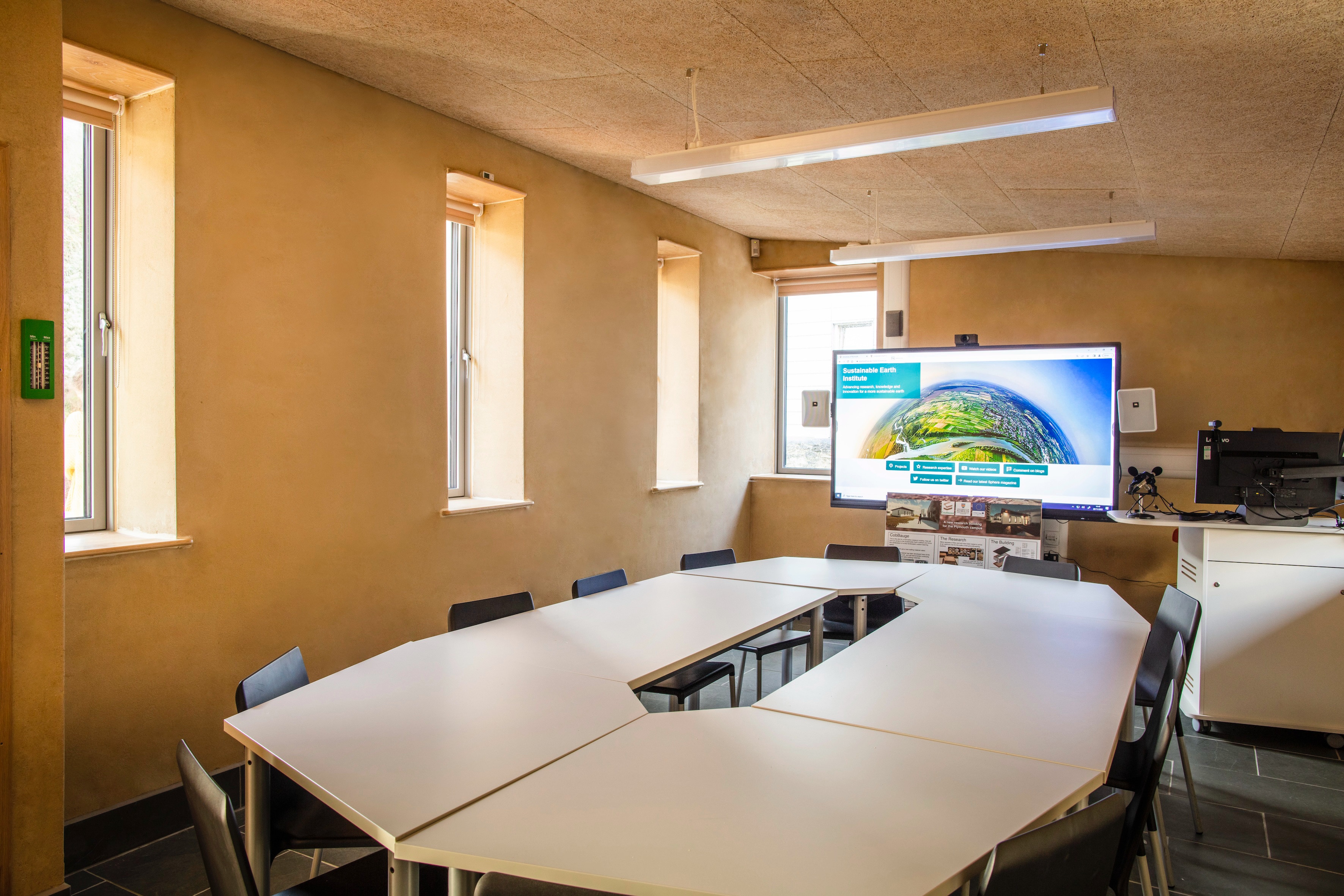
The proposed CobBauge building will also provide the basis for on-site training, so that other local builders (traditional cob builders and others) and building professionals can learn how to design and build using this material. By up-skilling the local construction industry, it is hoped that a lost traditional construction vernacular can be brought into the 21st century and once again form an important role in Devon architecture.
This building was completed in June 2021.
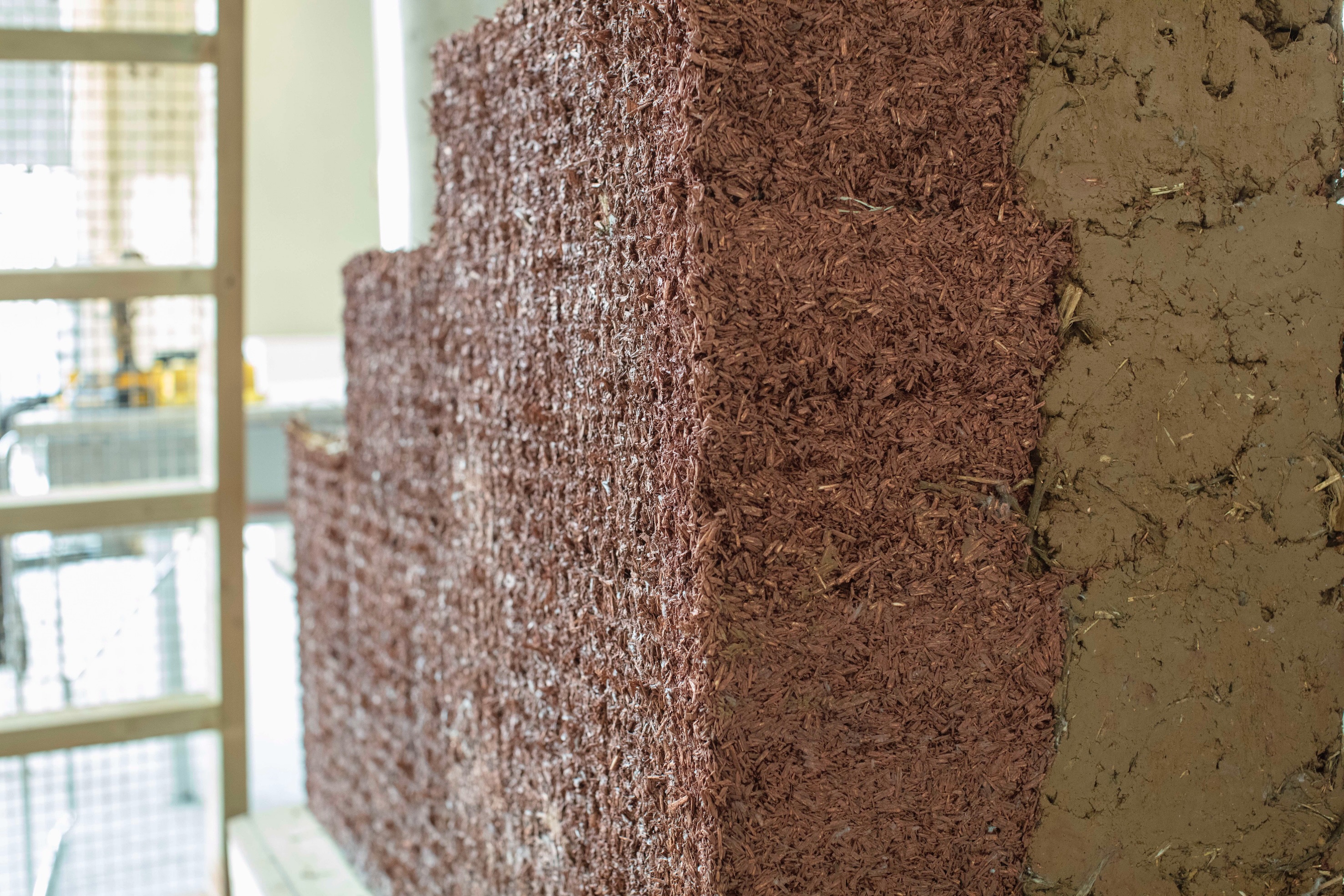
The rationale for the CobBauge research and material has been driven by an aspiration to bring a traditional vernacular material, Cob, back into use by present day contractors. The current limitation to traditional Cob is the building regulations (UK Part L) limiting the U-value to 0.3W/m2K. In addressing this issue, the CobBauge team have developed a new material that builds on the principles of traditional cob yet introduces a lower density thermal cob layer in a composite cob construction called CobBauge. This material has been laboratory measured to exceed the current UK thermal building regulations.